Est. 2004 – Proudly serving our community with outstanding service for 20+ years

When homeowners look at combining ducted air conditioning in Brisbane with solar power, the idea makes sense on paper. Ducted systems can use a substantial amount of electricity, particularly through long summer afternoons, while solar generation is usually strongest during the same part of the day. Crown Power Air Conditioning explains how this combination works in practice, what limits still apply, and when solar can make a genuine difference to running costs rather than simply sounding good in theory.
To assess whether solar can meaningfully support a ducted system, it helps to understand how much electricity the air conditioner actually uses, how solar output changes across the day, and how factors such as roof orientation, shading, system efficiency, zoning, insulation, and household usage patterns affect the result. In some homes, solar and ducted air conditioning are a strong match. In others, the savings are more limited, especially if most cooling or heating happens outside solar production hours.
Ducted air conditioning is often one of the biggest electrical loads in a home, so understanding its real power demand is the first step before deciding whether solar can offset it. Actual energy use varies from one property to another, but it can usually be estimated by looking at the system’s size, efficiency, operating conditions, and how the home performs thermally.
The two figures that matter most are the system’s heating or cooling capacity, shown in kilowatts, and its input power, which shows how much electricity it draws while running. Capacity tells you how much heating or cooling the unit can deliver. Input power tells you how much electrical energy it needs to do that job. These figures are very different, and that distinction is important when comparing air conditioning demand to solar output.
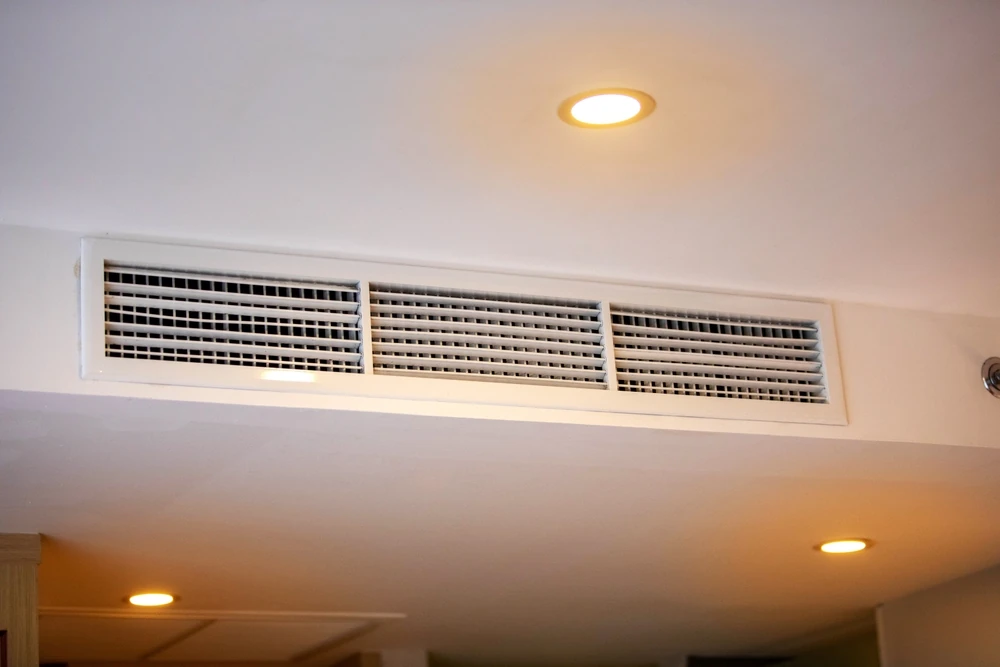
Most modern ducted systems installed in Australian homes sit somewhere between 8 kW and 20 kW of cooling capacity. Their electrical input is much lower than those capacity figures, but it is still significant enough to affect power bills.
As a general guide, a smaller 8 kW ducted system may draw around 2.2 to 3 kW at full load. A mid-sized 12 to 14 kW system may sit closer to 3.5 to 4.8 kW. Larger 16 to 20 kW systems can draw around 4.5 to 6.5 kW or more when working hard. These are peak figures rather than constant usage figures.
In real operation, most modern inverter systems do not run at maximum input the entire time. Once the home reaches temperature, they ramp down and maintain comfort more efficiently. In a home with decent insulation and sensible thermostat settings, average running demand is often much lower than the rated peak input.
Two homes with similar ducted systems can have very different electricity use because the building itself plays a major role. Large open layouts, poor insulation, high ceilings, older glazing, strong western sun, and leaky ductwork can all push the system closer to full output for longer periods.
The condition and design of the ducted system matter as well. A well-designed inverter unit with properly sized ducts and zoning will usually use far less power than an older or poorly installed system trying to cool too many spaces at once. This means the question is not simply how big the air conditioner is, but how efficiently the whole home and system work together.
In a standard grid-connected home, solar does not power a ducted air conditioner in isolation. Instead, it reduces the amount of electricity the home needs to import from the grid while the system is operating. If solar production is high enough at that moment, it may cover most or all of the air conditioner’s demand. If it is not, the grid supplies the shortfall automatically.
This is an important distinction because it shapes expectations. In most homes, solar is not about making the air conditioner independent from the grid all day and night. It is about lowering the cost of running it during the periods when solar generation and cooling demand overlap.
Solar panels generate direct current electricity, which is converted by the inverter and supplied to the home’s circuits. Any appliances running at that time, including a ducted air conditioner, use that power first. If the home is using less than the panels are producing, the excess flows back to the grid. If the home needs more than the panels can provide, it draws the difference from the grid.
This means the ducted system does not specifically choose solar or grid power. It simply uses electricity as needed, and the home’s meter records the net outcome. Financially, the benefit comes from using more of your own solar production on site instead of buying electricity at the retail rate.
Ducted cooling demand in Brisbane often rises through the late morning and into the afternoon, which lines up reasonably well with solar production. That overlap is one of the main reasons solar can work well with air conditioning. A clear summer day can provide strong solar output just as the system starts working harder to maintain indoor comfort.
The best results are usually achieved when the home is cooled during the period of strongest solar generation rather than leaving all of the load to the early evening. In practical terms, this may mean pre-cooling the home earlier in the afternoon so the system does not need to run as aggressively once solar output begins to taper off.
Without a battery, solar can only offset air conditioning while the sun is shining. It cannot provide power after sunset, and it cannot cover early morning heating loads in winter unless stored energy is available. Even so, this does not make solar ineffective. In many homes, daytime self-consumption still delivers meaningful savings because electricity used directly in the home is usually worth more than exported solar credited at a low feed-in tariff.
This is why a well-sized solar system can still improve the economics of ducted air conditioning without any battery storage. The savings are strongest when the system is used during the day and when the property makes good use of the solar energy being produced.
Solar can fully cover the running demand of a ducted air conditioner at certain times of day, but that does not mean it will do so continuously. Whether it can cover the whole load depends on the size and efficiency of the air conditioner, the size and output of the solar system, the weather, and when the home actually needs heating or cooling.
For many households, the more realistic goal is not complete independence from the grid, but reducing how much grid electricity the system needs over the course of the year. That is often where the strongest value lies.
A typical family home with a ducted system may need between 2.5 kW and 6 kW of electrical input during steady daytime operation, depending on the size of the unit and how hard it is working. A solar system in the 8 kW to 13 kW range can often make a major contribution in these conditions, especially if the roof has good orientation and little shading.
A smaller system, such as 5 kW or 6.6 kW, can still offset a meaningful portion of the load, but it is more likely to need help from the grid during hotter conditions or when other major appliances are running at the same time. This is why solar sizing should be looked at in the context of the whole household rather than the air conditioner alone.
The biggest limitation is timing. Solar works best during the middle of the day, while many households still want cooling into the evening and heating on winter mornings and nights. Without a battery, those periods will rely on the grid.
Seasonal changes matter as well. Summer solar production is strong and often aligns well with cooling demand, but winter generation is lower and days are shorter. At the same time, reverse-cycle heating can increase energy use on cold mornings and evenings. A solar system that performs well for daytime summer cooling may still leave a noticeable heating load to the grid in winter.
The homes that get closest to fully solar-supported ducted operation usually have several things working in their favour. They have an efficient inverter ducted system, effective zoning, a generously sized solar array, good roof orientation, limited shading, and sensible thermostat control. They also tend to have better insulation and glazing, which reduces how hard the system has to work in the first place.
A battery can increase solar coverage further by storing excess daytime generation for evening use, but batteries add significant cost. For many households, the better return comes from improving the home’s thermal performance and choosing an efficient ducted system before spending more on storage.
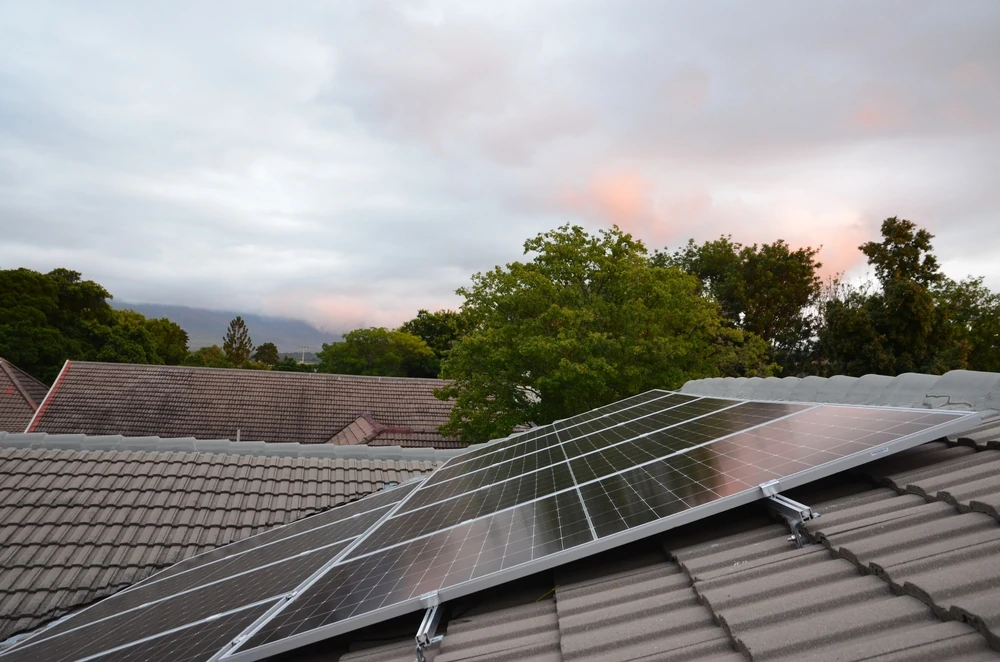
It is easy to assume that adding more solar panels will solve high air conditioning costs, but panel count alone does not fix an inefficient ducted system. If the air conditioner is oversized, poorly zoned, connected to leaky ducts, or installed in a home with weak thermal performance, it will consume more power than necessary regardless of how many panels are on the roof.
Improving efficiency often reduces operating demand more effectively than increasing generation. A system that needs less electricity is easier for solar to support, which can improve both savings and comfort without forcing the solar installation to do all the heavy lifting.
A more efficient ducted system delivers the same comfort using less electricity, which means a greater share of its running demand can be covered by solar output. In practical terms, that can reduce how large the solar array needs to be and improve the value of each kilowatt generated on the roof.
The difference can be substantial. A high-efficiency unit operating in a well-insulated home may sit comfortably within the output of a modest solar system during the middle of the day. A less efficient unit meeting the same comfort demand may exceed that output more often, pulling extra power from the grid and reducing the financial benefit.
Ductwork has a major effect on efficiency, yet it is often overlooked when homeowners focus only on the air conditioning unit itself. Poorly insulated ducts in a hot roof space, undersized runs, sharp bends, leakage at joints, or too many outlets operating at once can all waste conditioned air and force the system to work harder.
That extra workload increases electricity consumption and makes solar offset less effective. In other words, a poorly performing duct system can quietly erode the value of both the air conditioner and the solar array. Good duct design, proper sealing, insulation, and zoning are essential if the aim is to reduce running costs meaningfully.
Solar and ducted air conditioning usually make the most financial sense when there is strong daytime use, good solar access, and an efficient system. The value comes from replacing expensive grid electricity with your own solar generation during the hours when the ducted system would otherwise cost the most to run.
For households that use ducted cooling regularly through sunny afternoons, the savings can be substantial over time. For households that use most of their heating and cooling after dark, the financial case is usually weaker unless a battery is also part of the setup.
Several factors tend to improve payback. A roof with good northerly, north-easterly, or north-westerly exposure and minimal shading will usually generate more usable solar energy across the day. A home with decent insulation and glazing will need less air conditioning runtime, which improves the percentage of load that solar can cover.
Electricity tariff structure matters too. When retail electricity prices are high and feed-in tariffs are relatively low, it becomes even more valuable to use solar directly in the home rather than export it. In these conditions, running a ducted system during solar hours can deliver a better return than simply sending excess energy back to the grid.
The financial benefits are often more limited in homes that use air conditioning only occasionally or mostly at night. The same applies where the roof has heavy shading, awkward orientation, or limited space for panels. If solar production is restricted, the system may not offset enough daytime demand to justify expectations of large bill reductions.
Likewise, if the ducted system itself is inefficient or the house struggles to retain conditioned air, more of the solar generation will be consumed simply overcoming those weaknesses. In these cases, improving system design or the home envelope may be the smarter first step.
Before pairing a ducted system with solar, it is worth asking whether the air conditioner is efficient enough to make the most of that solar energy. An older or poorly performing system can consume so much electricity that even a well-sized solar installation only scratches the surface.
Assessing this properly means looking beyond brand alone. The system’s age, inverter technology, zoning, energy rating, duct condition, control strategy, and the home’s insulation all contribute to how well it will work with solar.
Modern inverter systems usually pair better with solar because they vary their output smoothly instead of cycling on and off at full power. That more stable demand profile makes it easier for solar generation to cover a larger share of operation. Higher-rated systems also use less electricity to deliver the same result, which improves the economics of solar support.
Older systems, especially those more than 10 to 12 years old, often use noticeably more power than current high-efficiency models. In some homes, upgrading the ducted system can reduce energy use enough to make the solar investment perform far better overall.
Even a good-quality unit can perform poorly if it is the wrong size or connected to poorly designed ductwork. Oversized systems can short cycle and draw unnecessarily high peaks. Undersized systems can run for long periods at high output. Both reduce efficiency and make solar offset harder.
Control strategy matters as well. Zoning helps avoid conditioning empty rooms, while sensible temperature settings reduce unnecessary load. When these basics are overlooked, solar panels are often expected to compensate for energy waste that should have been addressed elsewhere.
Whether solar can run ducted air conditioning in Brisbane depends less on a simple yes-or-no answer and more on how well the whole system is planned. In many homes, solar can cover a large share of daytime ducted cooling and make a noticeable difference to running costs. In fewer homes, it can cover nearly all daytime operation. What it cannot do on its own is eliminate the realities of weather, night-time demand, poor insulation, or an inefficient air conditioning system.
The best results come from treating solar and ducted air conditioning as one integrated strategy. That means looking at the home’s thermal performance, the efficiency and design of the ducted system, roof suitability, likely usage patterns, and the financial return of the solar array. When those elements are aligned properly, solar can become a practical and cost-effective way to reduce the cost of whole-home comfort rather than just an appealing idea.