Est. 2004 – Proudly serving our community with outstanding service for 20+ years

Rising electricity prices on the Gold Coast mean ducted air conditioning can quickly become one of the largest contributors to a household power bill. Many homeowners assume high running costs are simply the price of comfort in a subtropical climate, yet in our experience at Crown Power Air Conditioning most systems are using far more energy than they need to. By understanding what really drives ducted air conditioning energy use and how daily habits affect performance it is possible to significantly cut costs without sacrificing a cool comfortable home.
In this article Crown Power Air Conditioning explores the practical changes that have the biggest impact. Homeowners will see how correct zoning and scheduling reduce wasted cooling learn why moderate thermostat settings are more efficient than extreme temperature targets and discover how better airflow can ease strain on the system. Our team also explains when it makes financial sense to adjust upgrade or partially retrofit older ducted units so that money is not wasted on unnecessary replacements. By the end readers will know where to focus their efforts to lower energy consumption extend system life and keep their Gold Coast homes comfortable for less.

For homeowners, reducing the running costs of ducted air conditioning on the Gold Coast starts with understanding what actually uses the energy. Many people focus only on the thermostat setting, but hidden factors within the system and the home can quietly push power bills up.
By knowing which elements have the biggest impact, such as temperature settings, run time, building insulation, and the condition of the ductwork, it becomes much easier to target practical changes that reduce energy consumption without sacrificing comfort.
The temperature chosen on the controller is one of the largest drivers of energy use. Every degree cooler in summer or warmer in winter can add around 5 to 10 percent to running costs. On the Gold Coast setting summer cooling around 24 to 25 °C rather than 21 to 22 °C often delivers noticeable savings while still keeping the home comfortable.
How long the system runs each day matters just as much. Units that are left running all day to maintain a very tight temperature band use far more power than systems that are set with realistic comfort levels and switched off when the home is empty. Using timers or Wi‑Fi control to start the system shortly before arriving home is usually more efficient than running it all day at a higher set point.
The type and efficiency rating of the indoor and outdoor units strongly influence energy use. Older fixed speed systems typically cycle on and off at full capacity and can use significantly more energy than modern inverter systems that can ramp output up or down. The capacity also needs to match the size and layout of the home. An undersized unit may run constantly while an oversized one may short cycle which both waste energy.
Ductwork is another key factor that many homeowners overlook. Poorly insulated or leaking ducts in a roof space heated by the Gold Coast sun can lose a large portion of cooled air before it even reaches the rooms. Gaps loose connections crushed sections or deteriorated insulation all force the system to work harder to deliver the same comfort. Correct duct sizing balanced airflow and quality insulation are essential to keep energy use in check.
How well the home holds conditioned air has a direct impact on energy demand. Single glazing unshaded west facing windows gaps around doors and minimal ceiling insulation let heat flow in and out quickly so the system must run longer to maintain the set temperature. Simple improvements like roof insulation draught sealing blinds or awnings and appropriate shading can significantly cut cooling and heating load.
Zoning also drives energy consumption. Running the whole house when only the living area or a couple of bedrooms are in use wastes capacity. A well designed zoning layout with separate controls for day and night areas means the system only conditions the spaces that need it. However too many small zones or closing too many outlets can create high duct pressures and inefficiency so zones must be designed correctly and used as intended.
Smart use of zoning and scheduling is one of the most effective ways for Gold Coast homeowners to cut ducted air conditioning running costs without sacrificing comfort. By only cooling the rooms that are actually in use, and only when they are needed, energy waste drops significantly.
Many modern ducted systems include zone controls, programmable timers and smart controls. When these features are used correctly, they can reduce energy consumption by 20 to 40 percent compared with running the whole house at one constant setting.
Zoning divides the home into separate areas that can be controlled independently. The key is to group rooms that are used at the same time and that have similar comfort requirements.
For most Gold Coast homes, a simple and effective layout is:
Avoid creating too many small zones, as this can cause airflow and pressure issues that reduce efficiency. Instead, establish a few practical zones and use doors to separate cooled areas from uncooled ones. For example, in the evening the living zone can be switched off and bedroom doors closed so only the bedroom zone is conditioned.
Zoning is particularly valuable in double-storey homes, where the upper level often becomes significantly hotter. A dedicated upstairs zone allows targeted cooling at night without overcooling the lower floor.
Scheduling allows the system to automatically adjust temperatures and zones based on regular household routines. This prevents the unit from running longer or harder than necessary.
For weekday schedules, a typical approach may include:
In summer, many Gold Coast homes benefit from setting the timer so the bedroom zone starts 20 to 30 minutes before bedtime rather than running the whole house for hours. In winter, the reverse approach can apply, with morning schedules warming key living areas before occupants get up.
Zoning and scheduling deliver the greatest savings when paired with realistic temperature settings. For cooling, a set point of 24 to 25°C for occupied zones is generally considered efficient. Every degree lower can add up to 10 percent to running costs.
If a room is only used briefly, such as a study, it is often more cost-effective to cool a nearby larger zone to a reasonable temperature and use ceiling fans rather than lowering that one room to a very low setting. Using fans in occupied zones allows slightly higher temperature set points while still feeling comfortable, which compounds the savings created by zoning and scheduling.
For many Gold Coast homes, the thermostat setting is the single biggest factor influencing how much a ducted air conditioning system costs to run. Small changes of just a degree or two can add up to meaningful savings across a long summer without sacrificing comfort.
Rather than setting the system to very cold or very hot temperatures and expecting it to respond faster, homeowners should focus on efficient, realistic set points and consistent use. The thermostat works best as a fine-tuning tool, not an on/off switch.
In a Gold Coast summer an efficient cooling setpoint for most households is usually between 24°C and 26°C. Every degree lower than this can increase cooling energy use by roughly 5 to 10 percent so keeping the setpoint a little higher has a direct impact on the electricity bill.
In winter reverse cycle ducted systems are usually most efficient at 19°C to 21°C. Setting the thermostat to 25°C or higher in winter forces the system to work very hard which can cause longer run times higher costs and more wear on components.
Homeowners should start with these ranges then adjust by 0.5 to 1°C at a time until everyone is comfortable. Ceiling fans can also be used to make 24°C feel cooler in summer and allow an extra degree or two of efficiency.
Many people drop the thermostat to 18°C in summer or push it to 28°C in winter, thinking the system will heat or cool the home faster. Modern inverter ducted systems operate at the same rate to reach the set point regardless of how low or high it is. Extreme settings simply cause the system to run longer and draw more power.
Very low summer settings can also create additional issues, including:
A more efficient approach is to choose a sensible set point, close doors to unused rooms and ensure zoning is configured correctly so the system conditions only the areas that need it.
Many ducted systems in Gold Coast homes already have programmable wall controllers or Wi-Fi smart controls. When used properly, these features can automate efficient settings and prevent the system from running harder than necessary.
Homeowners can:
Smart thermostats that use occupancy sensing or weather data can further reduce energy use. The key is to set efficient temperatures and allow the system to operate consistently, rather than frequently overriding the thermostat with extreme settings.
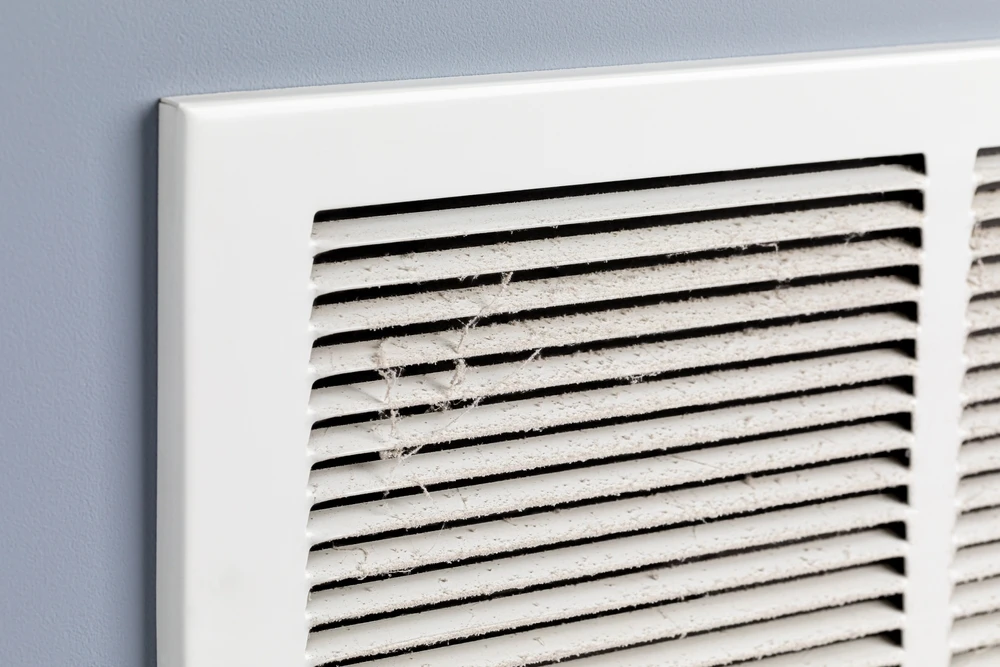
Good airflow is one of the biggest factors influencing how much energy a ducted air conditioner uses. If air cannot move freely through the return grille, ducts and supply vents, the system must work harder to deliver the same cooling, which increases power bills. Improving airflow reduces strain on compressors and fans so the system can reach the set temperature faster and cycle off sooner.
On the Gold Coast, where systems often run for long hours in hot, humid weather, any airflow restriction is magnified. Addressing simple airflow issues first often delivers quick energy savings and can help extend system life.
Dirty or blocked filters are one of the most common causes of high energy use. As filters clog, the fan must work harder to move air, increasing power draw and noise while reducing comfort.
For typical Gold Coast homes, it is generally recommended to:
It is also important to keep the return air grille clear. Furniture, baskets or décor placed in front of the return can restrict airflow. The grille should have at least 30 to 50 cm of clear space in front so air can flow freely back to the indoor unit. If the return is located in a hallway, bedroom doors should be undercut or fitted with transfer grilles so air can easily return to the system.
Supply vents deliver cooled or heated air into each room. When vents are closed or blocked, pressure inside the ductwork increases and the fan must use more energy to push air through the system.
Homeowners should:
In zoned systems, manual or motorised dampers regulate airflow to different areas of the home. If too many zones are shut at once, the system may be forced to push a large volume of air through a very small number of ducts. It is generally recommended to keep at least 50 to 60 percent of the total supply area open at all times so the fan can operate within its efficient range.
Leaky or crushed ducts waste energy by spilling cooled air into the roof space instead of delivering it to the rooms. On the Gold Coast, where roof cavities can reach very high temperatures, these losses can become significant.
Signs of duct issues include uneven temperatures between rooms, weak airflow from certain vents, or visible kinks and tears in flexible ducting. An air conditioning technician can:
By restoring correct duct sizing and sealing, airflow improves, system strain reduces and energy use becomes more consistent throughout the home.
There comes a point where continuing to spend money on an inefficient ducted system no longer makes financial sense. The key is understanding when a simple adjustment or repair will solve the issue and when an upgrade will deliver meaningful savings on power bills over the long term.
A system that is correctly sized, properly set up and well controlled can often achieve significant improvements without full replacement. However, if the unit is ageing, frequently breaking down or clearly oversized or undersized for the home, it may be more cost-effective to invest in a modern high-efficiency system.
If a ducted unit is under 10 to 12 years old and was correctly sized for the home, an adjustment or minor upgrade often provides the best value. Common examples include:
These changes are relatively low cost compared with full replacement and can reduce energy use by 10 to 30 percent in some homes. On the Gold Coast, where cooling is used heavily each summer, that can translate into noticeable bill reductions within a single season.
This approach is generally suitable when the system remains reliable, both indoor and outdoor units are in good condition and higher power bills are mainly the result of inefficient operation rather than poor equipment efficiency.
Sometimes one component is clearly holding the system back. In these cases a targeted upgrade can make financial sense without replacing everything.
For example upgrading an old manual wall controller to a smart Wi‑Fi thermostat with zoning and occupancy features can significantly cut wasted run time. Replacing badly designed or deteriorated flexible duct with insulated rigid ductwork in key runs can also boost airflow so the unit does not have to run as long to reach set temperature.
These partial upgrades are most attractive when the core equipment is mid life around 7 to 12 years old but still in good condition. The improved comfort and lower kWh use can often pay for the upgrade within a few years.
Full replacement usually becomes the smarter financial choice when the system is:
Modern ducted systems are typically far more efficient than units installed 15 years ago. On the Gold Coast, a new high-efficiency inverter system can reduce cooling energy use by 20 to 40 percent compared with an older fixed-speed unit.
Homeowners should compare the installed cost of a new system against the expected annual power savings and reduced repair expenses. When the payback period is reasonable and comfort levels are likely to improve noticeably, an upgrade often becomes the most cost-effective long-term solution.
In the end, reducing the running costs of a ducted air conditioning system isn’t about a single “magic fix”; it’s about understanding how the system works and making a series of smart, practical decisions. By first recognising what actually drives energy use, including heat load, system size and efficiency, duct design, and how long and how hard the unit has to run, homeowners can avoid guesswork and focus on the levers that truly matter. Using zoning and scheduling properly ensures you are only paying to cool or heat the areas you need, when you need them. Setting thermostats for efficiency rather than extremes takes unnecessary strain off the system and delivers steady comfort, instead of temperature “yo-yoing” that burns power. Optimising airflow through clean filters, balanced ducts, and unobstructed vents helps the system do its job with less effort and less wear. Finally, knowing when an upgrade or adjustment makes financial sense, whether that’s a smarter control system, ductwork rectification, or a higher-efficiency unit, allows you to invest where the long-term savings will outweigh the upfront cost. Taken together, these strategies can significantly cut energy consumption, improve comfort, and extend system life, turning your ducted air conditioning from a major expense into a much more manageable and predictable part of running your home.